


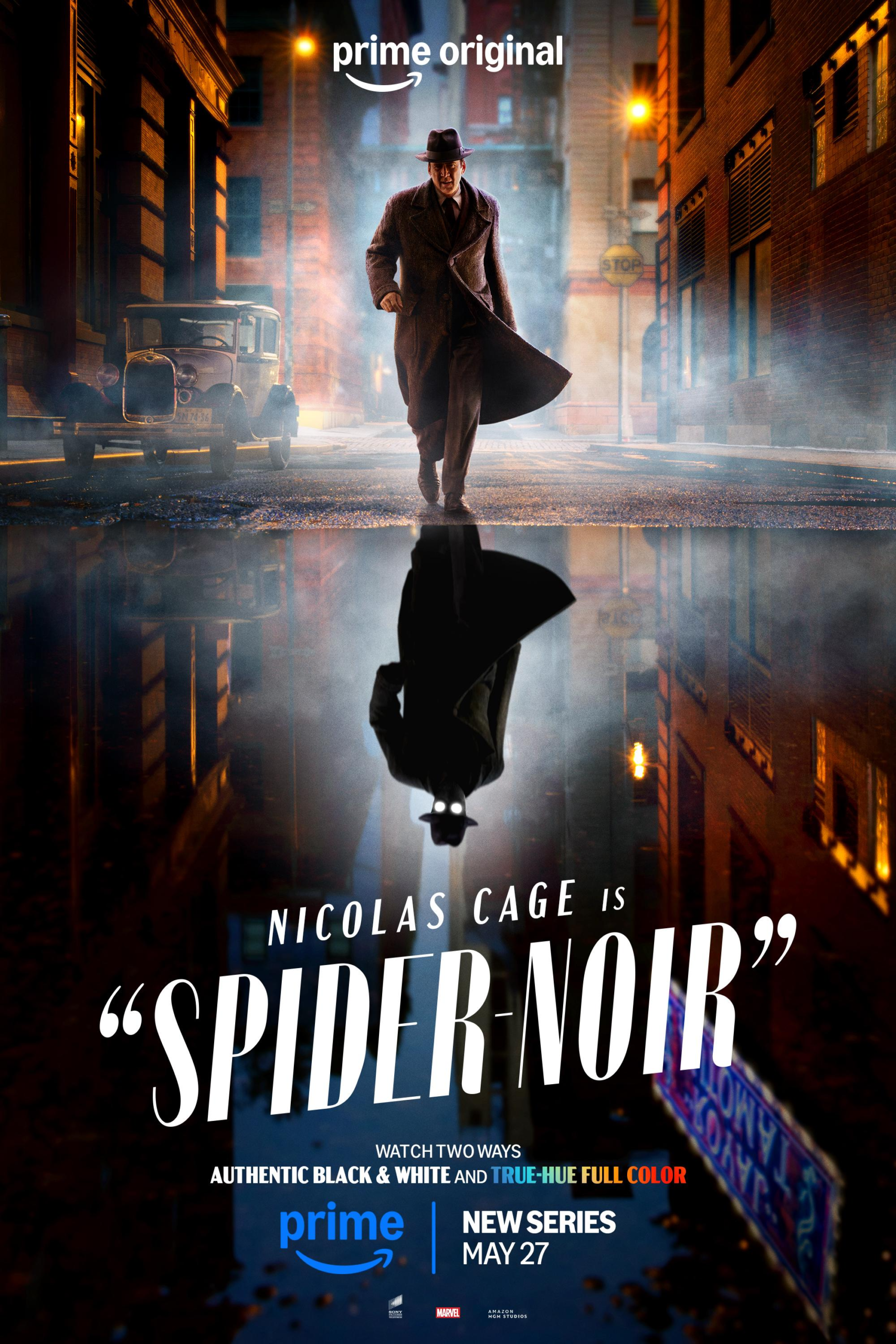
It’s been a while since I’ve watched anything superhero-related. The last thing I’d seen in that space was Spider-Man: Across the Spider-Verse, and that’s actually where I first encountered Spider-Man Noir.
So when I found out there was going to be a live-action series with Nicolas Cage playing that character, I was immediately interested. I didn’t go in with high expectations, but I was curious — mostly because of the noir angle. And what a pleasant surprise it turned out to be, because the show absolutely delivers on that front.
Spider-Noir finds a really interesting balance. It’s not a superhero story dressed up in noir aesthetics. It’s a genuine noir story that happens to have characters with superpowers — and gradually becomes a cynical take on the superhero genre from the inside out.
That works so well partly because the premise is simple, and simplicity turns out to be one of the show’s biggest strengths. I didn’t expect to finish the season desperate for more episodes, laughing at Cage’s antics while also being completely hooked on the central investigation. But here we are.
This is a show that truly understands noir as a genre. It leans into familiar tropes, sure — but it does that deliberately, because it knows exactly what kind of story it wants to tell.
That might make it sound like it’s just recycling old movies. It’s really not. Spider-Noir is genuinely weird in the best way. Yes, it echoes practically every hard-boiled detective film from the 1940s — but at this point, what doesn’t echo something?
The difference is that the show doesn’t use those references as a crutch. You get the bitter detective, the decaying city, the eccentric criminals, the conspiracies that feel ripped straight from a pulp novel. And then, layered right on top of all of that, you get the chaotic energy of comic books — characters with absurd powers, over-the-top situations, and a protagonist who’s solving mysteries while clearly in desperate need of therapy.
The show mixes classic noir with comic book madness and somehow neither one cancels the other out. The result feels both familiar and genuinely fresh.
This is exactly the kind of production that tends to build an intensely loyal fanbase over time. Honestly, Spider-Noir has cult classic written all over it.
The decision to release each episode in both black-and-white and full color is a great example of how well the creators understand their own concept.
I watched it in black-and-white for the full noir atmosphere. Loved it so much that I’m planning to go back through the whole thing in the color version.
Part of what makes the setting so effective is how fully committed it is to 1930s America — the Great Depression, grimy alleyways, rapid-fire dialogue. Everything feels like it walked out of a Humphrey Bogart film, except the hero happens to be a Marvel character.
None of that would land if the cast couldn’t keep up. Nicolas Cage delivers one of the most entertaining performances of his career. He’s tough when the scene calls for it, genuinely funny when the script opens that door, and completely unhinged in the best possible way throughout. Perfectly, gloriously insane.
That’s really why everything clicks. This tired, grumpy, world-weary version of The Spider is an absolute joy to watch.
I’ll say it — Ben Reilly might be my favorite Spider-Man now. There’s something about that bone-deep exhaustion that got to me almost immediately.
And Li Jun Li, playing Cat Hardy, steals every single scene she’s in. Her character is mysterious, sharp, and has a chemistry with the lead that’s genuinely magnetic. She’s a classic femme fatale, and honestly one of the best versions of that archetype I’ve seen in years.
God, I love noir. It’s been a long time since I saw a production use all these genre elements this well, and this organically.
That’s probably why the show’s real heart lives in its tone. It’s violent, but it has real comedic timing. It’s dark, but it never tips into being depressing. The two sides coexist, and all the cynicism lands exactly where it should — in the dialogue.
Watching the black-and-white version, there are entire stretches where you genuinely forget you’re watching a Marvel production. It feels like a classic from the ’40s, just with significantly more punching and superpowers.
The pacing helps enormously. A noir investigation could easily drag, but the episodes are tight, well-developed, and loaded with cliffhangers — the kind that make eight episodes disappear before you realize what happened.
The show also knows when to dig into its themes and when to just let the story move. It never feels the need to over-complicate things to seem smart.
That lets the conflicts unfold naturally and the mysteries deepen at a satisfying rate. Not once did I feel like the show was padding its runtime.
That matters to me, because I’m the first person to bail on a show the moment it starts spinning its wheels. This one never did.
Maybe that’s exactly why Spider-Noir works as well as it does. It’s fun without becoming a parody. It’s dark without wearing you down. It’s stylish without feeling like it’s trying too hard.
In the end, what won me over most was that unlikely blend — classic noir and comic book chaos, two things that really shouldn’t work together this well. But they do.
Spider-Noir has absolutely made my list of favorites this year.