
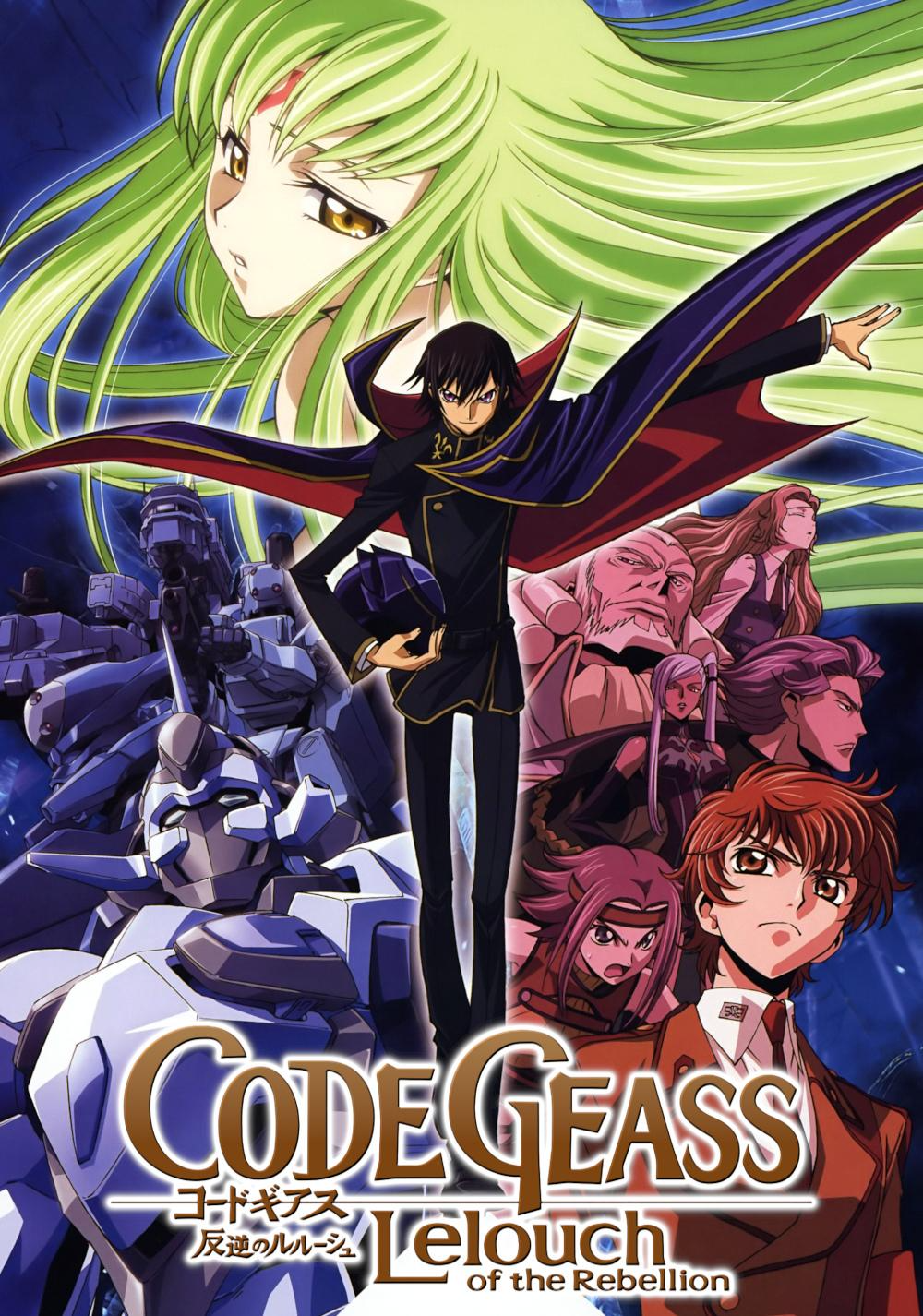
There are anime you watch, enjoy, and completely forget about a week later. And then there are anime that just stay with you — permanently lodged somewhere in the back of your head, never quite leaving. Code Geass: Lelouch of the Rebellion is firmly in that second category, and I say that with total conviction after having rewatched both seasons more than once.
I love this show. I know it has problems — clichés, convenient plot turns, the occasional stretch of logic — but it also has what might be the greatest ending in anime history, and honestly, that alone covers a lot of ground.
The premise is deceptively simple: an exiled prince gains a supernatural ability and decides to tear down the empire that destroyed his life. But Code Geass is anything but simple in execution. Every episode plays out like a chess match where the pieces are real people with real consequences, and Lelouch is the coldest, most fascinating player you’ll ever encounter in this medium. That dynamic is exactly what keeps the narrative in constant, electric motion.
What hooked me from episode one was how effortlessly the series balances politics, warfare, and moral dilemma without ever becoming a chore to watch. You don’t need to be a mecha fan to fall in love with this show — the Knightmare Frames are tools of the story, not the point of it. The point is Lelouch: his internal conflict, the choices he makes, and the price he pays for every single one. That’s where all the meaning lives.
Season one builds this world patiently — introducing the setting, the characters, the factions, and escalating the tension in a way that genuinely leaves you breathless. It’s not without stumbles. The school episodes can feel jarring next to the battlefield sequences, like they belong to a completely different show. But even those work as necessary breathing room before the series hits you with something brutal.
Kallen Kozuki is one of the clearest examples of a well-written character in the first season. She starts out as support and gradually earns her place as one of the show’s emotional pillars. Every character has a defined role in the larger story, and when any of them suffers, you actually feel it. Sure, some of the secondary cast doesn’t get as much development as they deserve — but Code Geass would need at least a hundred more episodes to do proper justice to the sheer number of compelling characters it introduces. That’s not really a complaint.
When R2 arrives, the whole energy shifts. It’s more intense, more chaotic, more emotionally exhausting in the best possible way. Lelouch reaches an entirely new level of complexity. At some point you realize he’s not a hero or a villain, and that ambiguity becomes the beating heart of the entire series. He does things you don’t expect. He makes decisions that genuinely hurt. And you stay on his side anyway.
The twists in R2 are relentless. Every single episode ends on a turn that makes starting the next one feel mandatory. Some of them are honestly absurd — borderline ridiculous in how improbable they are — and here’s the thing: they still work. The show is so confident, so entertaining, and it has such a distinct grip on you that you end up embracing the absurdity as part of the deal.
Visually, Code Geass has aged well. CLAMP’s character designs are unmistakable — those elongated frames and dramatic expressions give the show a visual identity that no other anime really replicates. The Knightmare Frame battles carry real scale and intensity, with that signature Sunrise quality that holds up even in the most chaotic sequences.
And the soundtrack deserves its own mention. “COLORS” by FLOW remains one of the greatest opening themes in anime history, full stop. The music throughout carries emotional weight that amplifies scenes rather than just accompanying them. I’ll be honest — when I rewatched and that opening hit, I almost cried. That’s not an exaggeration.
But what impresses me most about Code Geass is its refusal to pass judgment on its own characters. Nobody is a pure hero. Nobody is a pure villain. Britannia is brutal and oppressive, and yet even from within that empire the show pulls out characters with depth and genuine humanity. That unwillingness to flatten good and evil into simple categories puts Code Geass well above most of what the industry produces.
So when the resolution finally arrives, across both seasons, the impact is massive. It’s one of the most courageous endings I’ve ever seen in anime. It doesn’t give you what you expect — it gives you something better. Something that hurts, that makes sense, and that you keep thinking about for weeks afterward. Very few anime land with that kind of clarity and nerve. Code Geass manages to do what Attack on Titan attempted: make you understand that the protagonist committed atrocities with intention, that he knows exactly how extreme and monstrous his choice was, and that history will mark him for it. Both the character and the story have the courage to fully own that. He chose to become a tyrant to stop a cycle of hatred — and the show never flinches from what that means.
That said, the rough edges are real. Some characters appear, vanish, and return without enough development to justify the emotional weight placed on them. A few subplots in R2 feel rushed as the finale approaches. And the tonal whiplash between school comedy and political war drama is a genuine creative gamble that not everyone will accept. None of that, though, meaningfully diminishes what the show achieves overall.
Code Geass is the kind of anime that recalibrates your standards. After it, shallow protagonists and stories without real consequences feel like a step backward. Lelouch is one of the most fully realized characters this medium has ever produced, and his journey — for everything it gets right and everything it stumbles over — is worth every minute. And his ending, every single time I watch it, makes me cry.
If you’ve never seen it, stop what you’re doing and go watch it. If you have, then you already know exactly what I mean.