
How Frieren Deconstructs the Hero's Journey (
Have you ever noticed that every hero story you love seems to follow the same recipe? The famous hero’s journey? Just think of any epic adventure that stuck with you — a movie, a book, a game. It almost always goes like this: someone discovers they have a special destiny, sets off on a journey, faces an impossibly powerful villain, and after a whole lot of sacrifice, wins in the end.
We grew up watching this. The structure is so familiar that we don’t even question it anymore. But then a question comes up: what happens after that? If you think about another genre, like romance, almost everything revolves around building up to the couple getting together. Once they finally do, the story ends and they live happily ever after.
But what actually happens after the happily ever after?
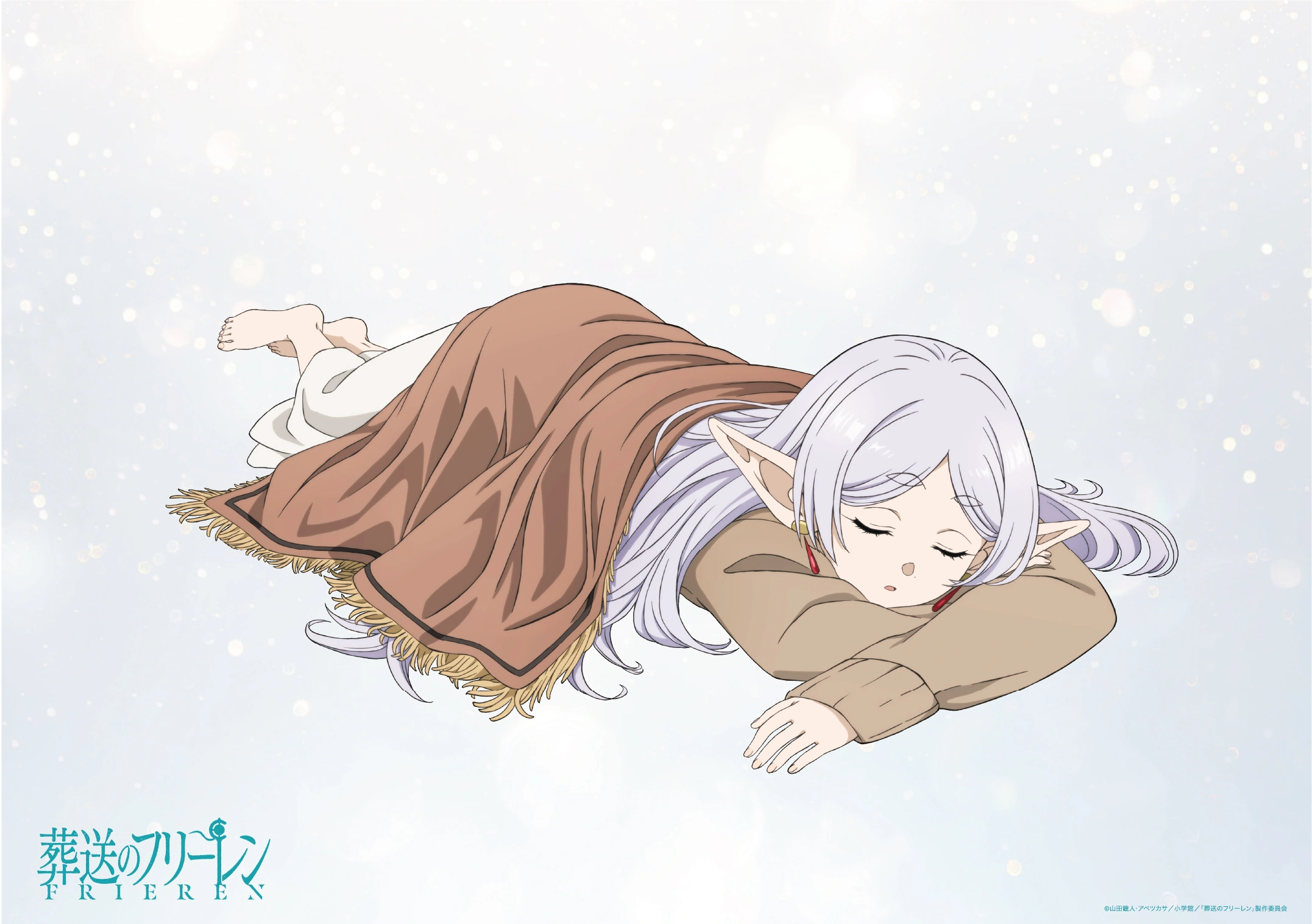
That’s exactly where Frieren begins. The series takes that classic hero’s journey structure and asks one very simple question: okay, you won — now what? What’s left? And what’s left, really, is this: Himmel, the hero, dies of old age.
When Frieren stands over his coffin, she realizes, decades too late, that she spent years traveling with someone she barely knew.
That’s the moment she understands that ten years in a human’s life is a massive chunk of someone’s existence. What felt to her like just another adventure, a distant memory among thousands of others, was the best part of his entire life.
While she saw it as one unusual stretch of an endless journey, for Himmel it was the experience that defined who he was. And that hits hard because it’s simple. And because it’s incredibly real.
Who hasn’t looked back and realized, way too late, that they spent too much time chasing one thing while ignoring something that mattered far more?
And that’s exactly where the deconstruction of the hero’s journey starts to come in. But before we get into the deconstruction, I think it’s worth actually understanding what that hero’s journey even is.
Because it’s not just a concept people throw around to call a story “cliche.”
The hero’s journey is basically a template, a pattern that keeps showing up in myths, legends, books, movies, and games. The guy who mapped it all out was Joseph Campbell, but you don’t need to have read a single page of his work to recognize the structure.
It basically goes like this: the hero lives an ordinary life, gets a call to adventure, resists at first, finds a mentor, crosses a threshold into an unknown world, faces trials, gathers allies, confronts the villain, nearly dies, wins, claims some kind of reward, and returns home transformed. That’s it.
The classic example is Star Wars: Luke Skywalker, just a farm kid, gets the call, finds his mentor, discovers the Force, and blows up the Death Star. Harry Potter, The Lord of the Rings, The Matrix, The Lion King. You’ve seen it a thousand times.
And it works, because it taps into archetypes that have been living in our heads for centuries. But this structure also conditions us to believe something a little misleading: that life gets resolved after one big climax.
The hero completes the mission, saves the day, and that’s it — happily ever after. Except life doesn’t work that way, does it?
Because after the final battle, the sun still rises, people still grow old, memories still fade. Most stories refuse to look at that part, because it seems less exciting, less epic. Or at least, that’s what we’ve been trained to think.
But that’s exactly the space Frieren steps into. And that’s where it answers a question almost no one thinks to ask: why are there so few stories about what comes after the hero’s journey?
And in fairness, other works have poked at this structure in interesting ways. Logan, for example — this version of Wolverine was an X-Man, saved the world more times than anyone can count. When we meet him, he’s old, broken down, and taking care of Professor Xavier, who’s suffering from a degenerative illness.
There’s no great mission left. No world to save. What’s left is the toll on a body that spent decades healing itself and now, finally, can’t keep up like it used to.
Watchmen takes the idea in a more cynical direction. The heroes are retired, society has turned on them, and the world is edging toward nuclear war.
The heroes eventually come to realize that the classic clash between good and evil just doesn’t apply anymore. The hero’s journey gets dismantled there because there’s no clean climax, no clear moral victory the way you get in so many other superhero stories.
But Frieren does something different. Frieren isn’t bitter. It’s not cynical. It’s about getting a second chance to walk the same road, but this time actually understanding what it all meant to everyone else.
It’s like the series is saying that the hero’s journey isn’t wrong, it’s just incomplete. It’s missing the chapter where you process what you lived through, the chapter where you look back and understand who those people walking beside you really were, and how much they mattered.
And in practice, Frieren literally retraces the same path, revisiting the same villages and reuniting with the same people the group helped decades earlier. Only now she’s not distracted anymore.
Every statue built in Himmel’s honor brings back a memory. Every silly little spell she once learned points back to something she lived. And piece by piece, it becomes a puzzle that slowly helps Frieren see something that should have been obvious, but that she never stopped to notice.
She genuinely loved those people, and she carried real affection for everything she had experienced. The problem is she never realized how much any of it mattered while it was happening.
And gradually, she comes to understand that those ten short years may have been just as important to her as they were to everyone else. Maybe even more.
So here’s the question: is the hero’s journey actually bad just because so many stories follow the same structure? Or is it bad because so many of them don’t try to do anything interesting with it? Because when you get down to it, is the problem the formula, or the people using it?